Which Best Describes Oceania's Trends in Population
The total population had declined by 08 percent from the time of the census five years previously the first time it. Which best describes Oceanias trends in population.

Oceania World Regional Geography
The decline in birth rate varies from country to country as does the time frame in which it is experienced.
. Already 77 of the population is below the age of 35. 2 Papua New Guinea. Oceania is a collection of islands and archipelagos in the tropical Pacific Ocean.
Current population of pop. The population is diverse with some common trends. B Pacific Islanders tend to have more rapidly growing populations than Australians and New Zealanders.
Oceania is a region that is located in the Pacific Ocean. As such the total population of a country in Stage 2 will rise because births outnumber deaths not because the birth rate is rising. In India the average age is 29 in China it is even older at 37.
Many thoughtful observers have noted that whatever problems individual nations facehunger poverty. Oceania collective name for the islands scattered throughout most of the Pacific Ocean. But in Africa the average age is 19 years old and rapidly getting.
Stage 2 of the Demographic Transition Model DTM is characterized by a rapid decrease in a countrys death rate while the birth rate remains high. Oceania is just a political region not a continent as is sometimes believed. Japan was the worlds eleventh-most populous country as of 2017.
Fewer than 65 million in all the peoples of Oceania possess a vast repository of cultural traditions and ecological adaptations. For many decades the enormous populations of South America Europe and Asia have grown quickly but today they have slowed and the majority of their populations are adults. High urbanization rates are more common in the eastern part of the region compared to the west.
Average relative annual growth Average absolute annual growth Estimated doubling time Years Official figure where available Date of last figure Source 1 Australia. Australia is a country and a continent. In 2016 the population of the United States was approximately 325 million people with an annual growth rate of approximately 07.
The most popular usage delimits Oceania further by eliminating Indonesia. It is consisted of 14 island countries and multiple other countries that are not fully independent and function as protectorats mainly of the USA and France. Which best describes Oceania.
Access to jobs has improved Women are pursuing higher education and postponing marriage and childbearing until their thirties in all of. A A region with many isolated island nations B. The region is characterized by the lack of a continental land mass and human habitation has.
24 rows Population 2020 Yearly Change Net Change Density PKm² Land Area Km². Oceanias population of 39. The population of only Japanese nationals was 1238 million in January 2021.
A majority of residents living in Oceania approximately 73 identify as Christians. Those two countries alone accounted for more than 28 million people while Papua New Guinea had a population of over 8 million. The size structure and growth of population can make a substantial difference in how resources of nations are consumed or exported.
A region with a shared common language D. A recent trend in the lives of the women of Australia and New Zealand Access to jobs has improved Women are pursuing higher education and postponing marriage and childbearing until their thirties in all of the follo Hawaii Guam Australia. High urbanization rates are more common in geographically large countries compared to small ones.
Northern America is projected to grow from 358 million people in 2015 to 396 million in 2030 with the prediction interval ranging from 387 million to 405 million. In Stage 3 of the Demographic Transition Model DTM death rates are low and birth rates decrease usually as a result of improved economic conditions an increase in womens status and education and access to contraception. The term in its widest sense embraces the entire insular region between Asia and the Americas.
Due to colonial neglect and historical isolation the Pacific Islands home to the worlds most diverse range of indigenous cultures continue to sustain many ancestral life-ways. Urban population has increased from 21936910 701 in 2000 to 30622700 705 in the current year. Most recently in 2018 Oceanias population was around 41 million people with the majority centered in Australia and New Zealand.
Australia is quite different from Oceania. It is a vast region consisted of tens of thousands of islands most of which are very small. The correct answer was given.
Too dangerous to be inhibited is the phrase among the phrases in the question best describes Oceanias physical geography. The decrease in death rate is commonly attributed to significant improvements in. A region united under a central government C.
10564427 670 In 2021 the population of Oceania was 42908000 and the average age increased from 296 in 1960 to 358. Papua New Guinea alone is home to one-third of the worlds languages. A Australians and New Zealanders tend to have more rapidly growing populations than other islanders.
A more common definition excludes the Ryukyu Kuril and Aleutian islands and the Japan archipelago. Population distribution is perhaps one of the most vital factors that affect the resource utilization of nations. The remaining members of the population subscribe to various religions including Hinduism Islam Buddhism Jainism Judaism Bahai as well as a wide array of traditional Indigenous belief systems.
C Overall in Oceania the trend is for larger families. The correct option among all the options that are given in the question is the third option or option c.
Geography Oceania Flashcards Quizlet

Asia And Oceania Too Big To Ignore
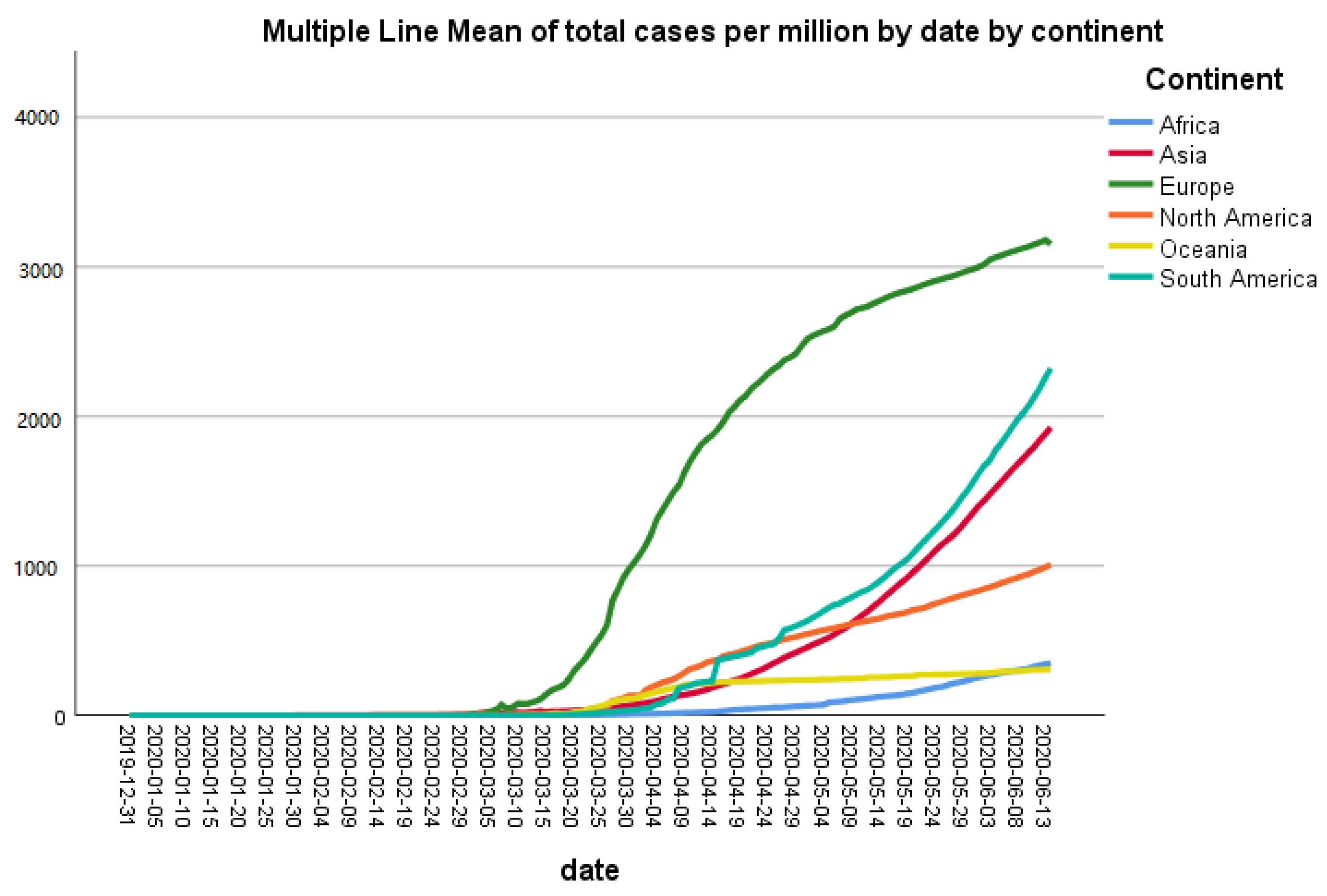
Ijerph Free Full Text Continent Wide Analysis Of Covid 19 Total Cases Deaths Tests Socio Economic And Morbidity Factors Associated To The Mortality Rate And Forecasting Analysis In 2020 2021 Html
No comments for "Which Best Describes Oceania's Trends in Population"
Post a Comment